Domestic LPG Price Hiked by ₹29 Per 14.2-kg Cylinder: New Rates, Reasons & What It Means for Indian Households
Key Takeaways
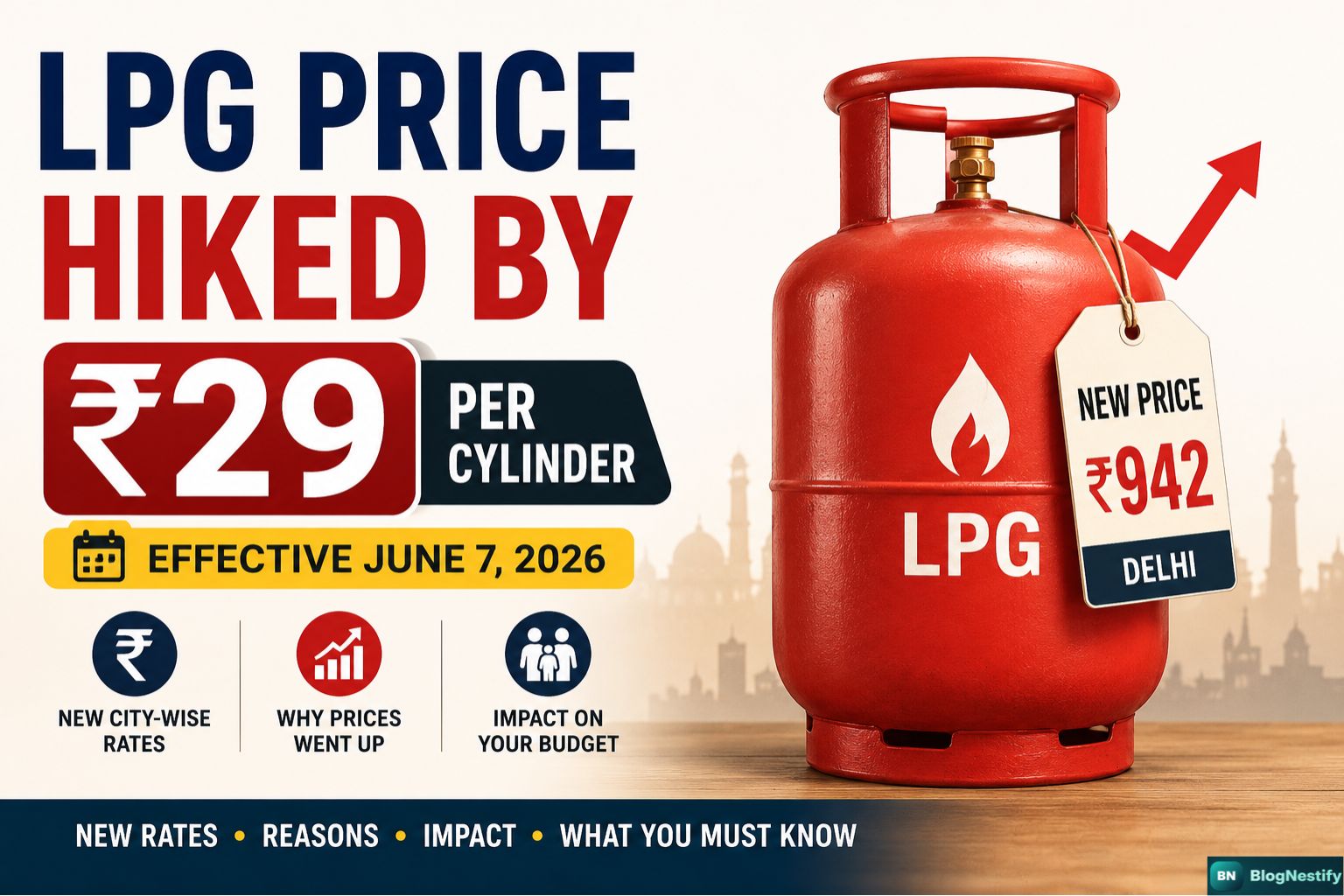
- Domestic LPG price raised by ₹29 per 14.2-kg cylinder effective June 7, 2026.
- New rate in Delhi: ₹942 per cylinder (up from ₹913). Mumbai: ₹941.50.
- This is the second hike in 2026 — a ₹60 increase had already been applied on March 7.
- West Asia conflict disrupted Strait of Hormuz shipping, through which India routes roughly 60% of its LPG imports.
- Before this hike, OMCs were losing an estimated ₹703 per cylinder sold.
- Ujjwala Yojana beneficiaries still receive ₹300 subsidy per cylinder — effective cost: ₹642.
- India's LPG prices remain lower than Pakistan, Nepal, Bangladesh, and Sri Lanka.
Cooking gas just got more expensive. State-owned oil marketing companies raised the price of domestic LPG by ₹29 per 14.2-kg cylinder on June 7, 2026 — the second revision this year and one that directly affects over 33 crore households across India.
The hike follows a larger ₹60-per-cylinder increase that came on March 7, when armed tensions in West Asia sent shockwaves through global energy markets and disrupted LPG shipments passing through the Strait of Hormuz. That earlier revision narrowed losses for oil marketing companies but did not eliminate them. According to industry estimates cited by PTI, companies were still losing around ₹703 per cylinder before Sunday's revision went into effect.
For most households, this translates to roughly ₹29 more per refill — the equivalent of about two additional chapati rolls at a dhaba. But at scale, across hundreds of millions of consumers, this kind of revision has real weight.
New LPG Cylinder Prices: City-Wise Rates After the June 2026 Hike
The revised prices came into effect from June 7. Here's what consumers in major cities are now paying for a 14.2-kg domestic LPG cylinder:
| City | Old Price (₹) | New Price (₹) | Hike (₹) |
|---|---|---|---|
| Delhi | 913.00 | 942.00 | +29 |
| Mumbai | 912.50 | 941.50 | +29 |
| Kolkata | 939.00 | ~961.00 | +29 (approx.) |
| Chennai | 928.50 | ~957.50 | +29 (approx.) |
City-wise rates vary slightly due to differences in local taxes, transportation, and handling charges. For precise rates in your area, check the official IndianOil, HP Gas, or Bharat Gas portals, or contact your local distributor.
Why Did LPG Prices Go Up Again?
The short answer: India imports a lot of its cooking gas, and the global supply chain for LPG ran into serious trouble earlier this year.
India is one of the world's largest LPG consumers, with around 332 million active domestic connections as of early 2026. Domestic production covers less than half the country's actual demand — in January 2026, India produced about 1.16 million tonnes of LPG while importing 2.19 million tonnes in the same month alone.
That import dependency creates exposure. Around 60% of India's LPG imports transit through the Strait of Hormuz — the narrow maritime corridor connecting the Persian Gulf to global shipping lanes. When military tensions in West Asia escalated in early March 2026, tanker movements through the strait slowed sharply. Freight insurance costs jumped, shipping delays mounted, and the Saudi CP benchmark price for LPG — the key international reference — rose by roughly 50% between January and April 2026.
The March 7 hike of ₹60 reduced those losses but could not close the gap entirely. When it became clear that global energy prices were not retreating quickly, another revision became unavoidable.
Beyond LPG, fuel costs have been moving across the board. Petrol and diesel prices rose by a cumulative ₹7.50 per litre between mid-May and early June, while CNG rates increased by around ₹6 per kg. The LPG revision is one piece of a broader fuel cost picture that has been shifting since the West Asia conflict disrupted energy markets earlier in the year.
Price History: How We Got Here
It helps to see the full picture of how LPG prices have moved over the past 12 to 18 months:
-
August 2024LPG prices last held steady at ₹803 per cylinder in Delhi for an extended period.
-
April 2025Prices revised upward by ₹50 per cylinder to ₹853 in Delhi, amid rising international prices and accumulated OMC losses.
-
March 7, 2026A ₹60 hike raises the Delhi rate to ₹913. West Asia conflict triggers Hormuz disruption, pushing international LPG benchmark prices sharply higher.
-
June 7, 2026Second 2026 hike: ₹29 per cylinder. Delhi price moves to ₹942. OMC losses had remained at an estimated ₹703/cylinder before this revision.
Over the 12 months from July 2025 to June 2026, domestic LPG prices in India rose by a cumulative ₹89 per cylinder.
What About Ujjwala Yojana Households?
The Pradhan Mantri Ujjwala Yojana (PMUY) remains the government's primary cushion against fuel price shocks for low-income families. Around 10.4 crore beneficiary households receive a ₹300 direct benefit transfer per cylinder through the scheme — a subsidy that has been left unchanged through all recent revisions.
For these households, the effective out-of-pocket cost after the June 2026 hike works out to ₹642 per 14.2-kg cylinder, compared to ₹942 for general consumers. Even at the market cost of ₹1,600–₹1,700 per cylinder, subsidised households pay less than 40% of what the fuel actually costs to supply.
Per capita consumption among Ujjwala beneficiaries has climbed steadily — from 3.68 cylinders per year in FY 2021–22 to 4.47 cylinders in FY 2024–25 — suggesting the scheme has genuinely changed cooking habits in households that previously depended on firewood or kerosene.
India's Prices Versus the Neighbourhood
One useful benchmark is what India's neighbours pay for the same 14.2-kg cylinder of cooking gas. Even after the June 2026 revision:
| Country | Approx. Cost per 14.2-kg Cylinder (₹ equivalent) |
|---|---|
| India (general consumer) | ₹942 |
| India (Ujjwala beneficiary) | ₹642 |
| Pakistan | ~₹1,046 |
| Nepal | ~₹1,207 |
| Sri Lanka | ~₹1,241 |
| United States / Australia / Canada | Significantly higher |
India's ability to keep prices below market rates for 33 crore households — across subsidised and unsubsidised categories — involves a combination of direct fiscal support, OMC loss absorption, and strategic supply management. It is not a zero-cost arrangement, but it is a deliberate policy choice.
Are OMCs Still Losing Money?
Yes — substantially. The ₹29 hike reduces losses but does not close the gap. With domestic LPG priced at ₹942 in Delhi and the actual cost of supply running at ₹1,600–₹1,700 per cylinder, oil marketing companies continue to absorb significant losses on every sale. Industry estimates suggest losses on petrol and diesel remain as well, at approximately ₹11 per litre on petrol and ₹33.6 per litre on diesel.
This means the government has so far chosen to spread the impact of rising global energy prices across OMC balance sheets and phased revisions rather than pass the full cost to consumers in a single move. Whether that approach continues will depend on how global crude and LPG prices behave in the months ahead.
What Should Households Do Now?
A ₹29 increase per refill is manageable for most urban households but adds up across the year. If you book 8–10 cylinders annually, that is an extra ₹232–₹290 per year. A few practical steps worth keeping in mind:
Check your subsidy status. If you are an Ujjwala beneficiary, confirm your ₹300 DBT is being credited to your linked bank account. Delays occasionally occur and going unnoticed can mean paying the full ₹942 unnecessarily.
Book on time. Supply conditions remain tighter than normal given ongoing global disruptions. Avoid booking late and running short — especially if your LPG usage is higher in monsoon months.
Compare distributor reliability. Bharat Gas, HP Gas, and IndanOil all offer online and SMS-based booking. If you have not already, set up the app-based booking system to avoid delays.
Consider usage efficiency. Pressure cookers, ISI-marked burners, and proper flame size all reduce consumption. With cylinder prices rising, even a 10% reduction in usage can save ₹90–₹100 per year at current rates.
0 Comments
Leave a Comment