The Digital Lockpick: How Commercial Spyware is Redefining Global Risk
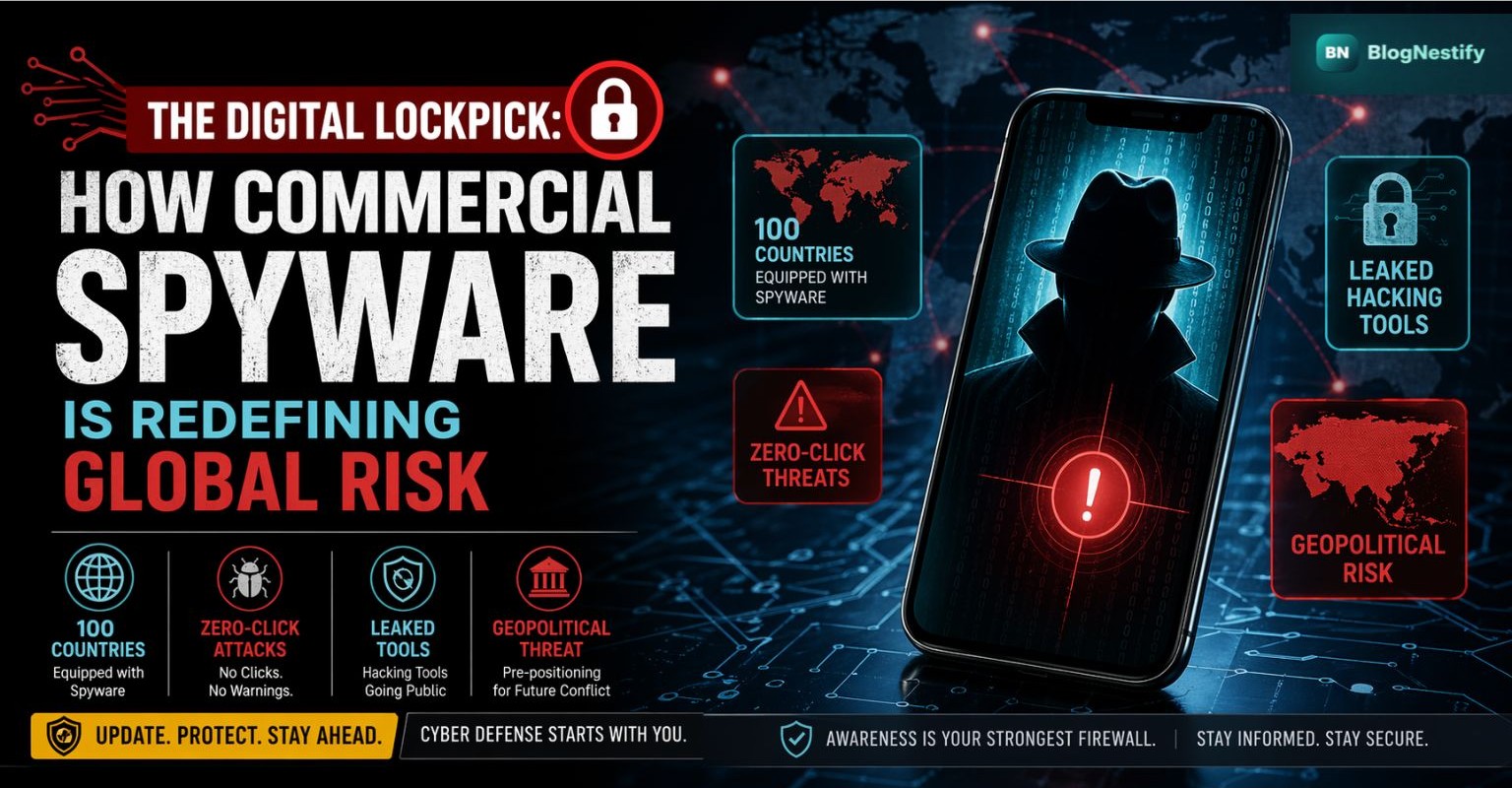
Imagine a world where your smartphone is not just a communication device, but a silent witness that can be turned against you at any moment. According to the U.K. National Cyber Security Centre (NCSC), that world is already here.
In a recent report, intelligence officials revealed that the number of countries equipped with commercial spyware has surged to 100 nations—a sharp increase from 80 just a year ago. This signals a dramatic shift in global cybersecurity dynamics.
The Rise of Commercial Spyware
The emergence of “hackers-for-hire” and private surveillance companies has transformed cyber espionage. Organizations like NSO Group have made advanced hacking tools accessible to governments worldwide.
- Expanded Targets: No longer limited to criminals, spyware now targets journalists, bankers, business leaders, and activists.
- Zero-Click Attacks: Devices can be infected without clicking links or downloading files.
- Lower Barrier to Entry: Governments can now purchase cyber weapons instead of developing them.
“British companies are failing to grasp the reality of today’s world.” — Richard Horne, Director of the NCSC
Key Findings from the NCSC Report
| Statistic / Detail | Impact |
|---|---|
| Total Nations with Spyware | 100 countries (up from 80 in 2023) |
| Primary Source of Attacks | Foreign adversarial governments |
| Major Actors | China-linked groups targeting sensitive data |
| The “Leak” Factor | Advanced tools leaking into public domain |
From Governments to the Public Domain
The threat is no longer limited to state actors. The recent leak of the DarkSword hacking toolkit, capable of compromising modern smartphones, demonstrates how dangerous these tools become once they spread beyond controlled environments.
Once leaked, cybercriminals can exploit these tools to target anyone using outdated software, increasing risks for everyday users.
The Geopolitical Impact
Cyberattacks are no longer just about stealing data—they are about strategic positioning. The NCSC warns that some nations are embedding themselves within critical infrastructure systems.
This “pre-positioning” allows adversaries to potentially disrupt essential services in times of geopolitical conflict, such as tensions surrounding Taiwan.
How to Protect Yourself
While you may not be a high-profile target, the widespread availability of spyware increases the risk of collateral damage. Here are key steps to stay secure:
- Update Devices Regularly: Install security patches immediately.
- Enable Lockdown Mode: Use high-security settings on iOS or Android.
- Limit Sensitive Data: Avoid storing confidential information on mobile devices.
- Stay Aware: Treat unexpected messages or calls with caution.
Conclusion
The digital arms race has shifted from secret government labs into everyday devices. As the barrier to cyber espionage continues to fall, the responsibility for protection is no longer limited to governments—it now rests with individuals and businesses alike.
In a world where your phone can be turned into a surveillance tool, awareness and proactive security measures are your first line of defense.
0 Comments
Leave a Comment