Are You Ignoring Early Heart Warning Signs? A Cardiologist Shares What to Know Before Turning 50
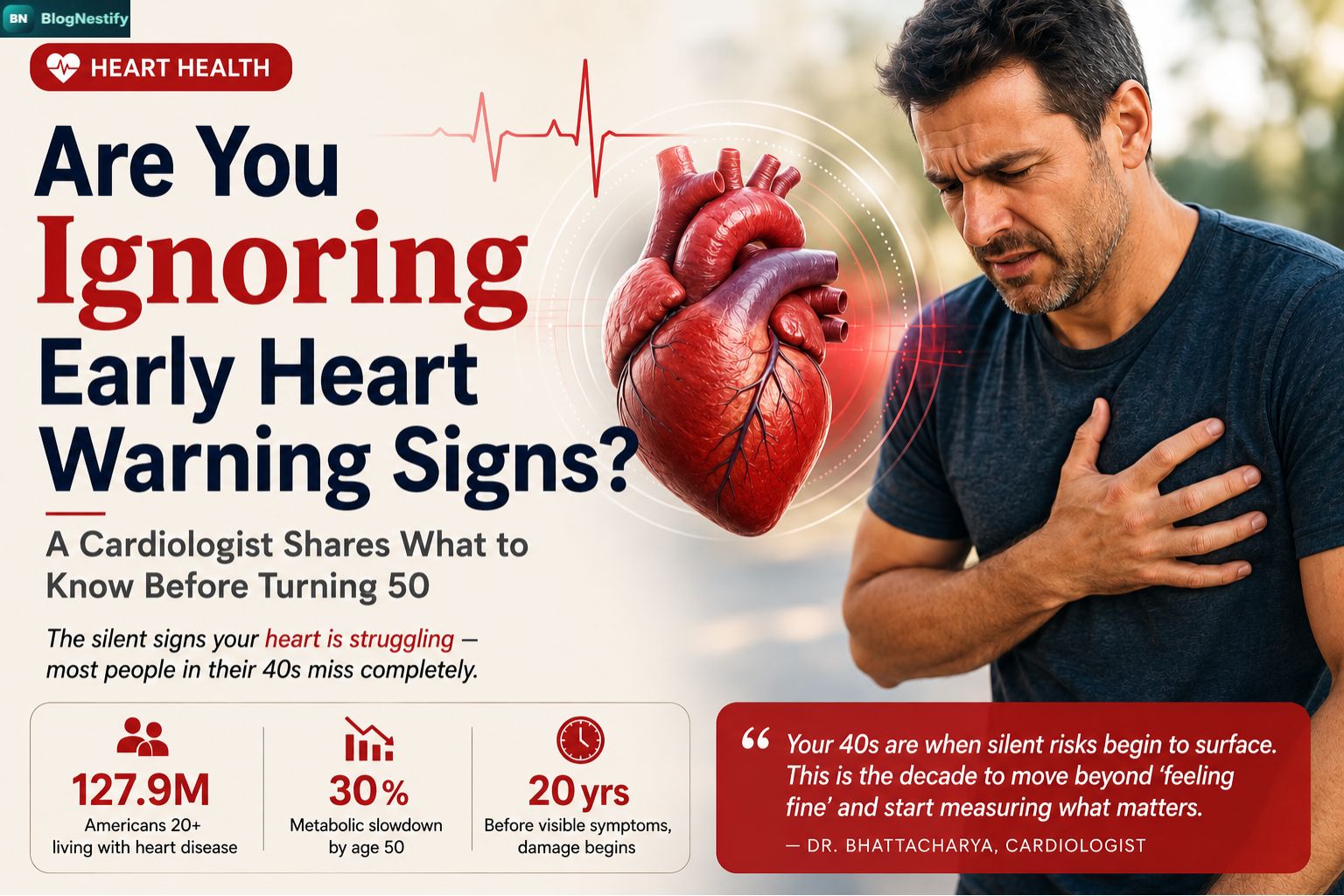
The decade before 50 is when metabolism shifts, stress accumulates, and lifestyle habits quietly set the stage for future heart problems — most people have no idea it's already happening.
Most people in their 40s feel fine. They're tired, maybe a little stressed, carrying a few extra kilos — but fine. That's the problem. According to cardiologists, "feeling fine" is exactly when silent cardiovascular damage is happening. The years between your mid-30s and 50 are when metabolic shifts, chronic stress, and sedentary habits quietly build the conditions for a heart attack that may feel sudden but has been brewing for decades.
Dr. Sanjay Bhojraj, a practicing cardiologist, has been vocal about this gap in awareness: people wait for dramatic symptoms when the real warning signs are far subtler — and far earlier than they expect. This article walks through what those signs are, why the years before 50 matter so much, and what you can actually do about it.
Why the Years Before 50 Are the Most Critical Window
Heart disease rarely shows up without warning. It builds. Research published in the Doetinchem Cohort Study found that metabolic risk factors — blood pressure, cholesterol, glucose — diverge between those who eventually develop cardiovascular disease and those who don't, as far as 15 to 20 years before a diagnosis. That means if you're 45, the decisions you're making right now are affecting a heart event that could occur in your early 60s.
The American Heart Association points out that by your 40s, blood pressure, cholesterol, and blood sugar can start trending upward even when you feel healthy. Stress from work and caregiving, limited physical activity, and the first real metabolic slowdown all converge in this decade. And for women, hormonal shifts during perimenopause can begin changing vascular health and cholesterol levels earlier than most realize.
"Your 40s are when silent risks begin to surface. This is the decade to move beyond 'feeling fine' and start measuring what matters."— Dr. Bhattacharya, Cardiologist, quoted in TIME Health (2025)
By the time you hit 50, metabolism can slow by up to 30%. That slowdown raises insulin resistance, elevates LDL cholesterol, and pushes blood pressure higher — a cluster cardiologists call metabolic syndrome. Arteries begin losing elasticity. The heart muscle itself stiffens slightly, making it harder to pump efficiently under stress or exercise.
The 8 Early Warning Signs Most People Dismiss
These aren't dramatic. They're the kind of symptoms people chalk up to aging, poor sleep, or a busy lifestyle. That dismissal is dangerous.
Unexplained fatigue
Tiredness that doesn't improve with rest, especially after mild activity, can mean the heart isn't circulating blood efficiently.
Chest tightness or pressure
Not always pain — a feeling of heaviness, fullness, or squeezing in the chest or upper back. Often worse during activity or stress.
Shortness of breath during routine tasks
Getting winded on stairs you used to take easily, or during activities that didn't wind you a year ago, is a red flag worth investigating.
Irregular heartbeat or palpitations
Occasional fluttering or a racing heart — especially during or after light exertion — can point to early arrhythmia or structural changes.
Swollen ankles or feet
Persistent puffiness in the lower legs, particularly after long periods of sitting, can signal the heart isn't moving fluid properly.
Lightheadedness or sudden dizziness
Brief dizzy spells — especially on standing up quickly or during mild exertion — warrant attention when they recur.
Disrupted sleep or waking breathless
Poor sleep worsens cardiovascular risk. Waking up breathless or with a racing heart at night can indicate early heart failure or arrhythmia.
Nausea or jaw/neck discomfort
Many heart attacks — particularly in women — present with nausea, upper back ache, or jaw pain rather than classic chest pain. Don't dismiss these.
Important: These symptoms come and go. Cleveland Clinic cardiologist Dr. Jacqueline Tamis-Holland notes that many heart events are preceded by "waxing and waning" symptoms that seem to resolve — making it easy to rationalize them away. The pattern of recurrence matters more than severity.
How Stress Is Quietly Damaging Your Heart Right Now
Chronic stress is one of the least-discussed cardiovascular risk factors, and one of the most damaging for people in their working years. When you're under prolonged stress, cortisol stays elevated. Elevated cortisol raises blood pressure, promotes inflammation in arterial walls, and pushes LDL cholesterol higher. It also disrupts sleep, encourages emotional eating, and reduces the motivation to exercise — creating a compounding loop of cardiovascular damage.
The American Heart Association's advice for adults in their 40s specifically flags stress management as cardiovascular medicine, not optional lifestyle advice. Research shows that adults under high occupational stress are significantly more likely to develop hypertension and atherosclerosis within a decade.
Depression compounds this further. The heart.org notes that depression releases stress hormones and increases inflammatory chemicals that narrow the arteries — a mechanism that directly links mood disorders to heart disease risk, independent of lifestyle habits.
The Decade-by-Decade Breakdown: What's Happening to Your Heart
Silent buildup begins
Blood pressure and cholesterol may start drifting. Plaque can begin accumulating in arteries without any symptoms. Family history, smoking, sedentary habits, and chronic stress all start leaving their mark. This is the decade to establish a baseline with your doctor.
Silent risks surface
Metabolic slowdown begins. Blood sugar, blood pressure, and cholesterol become harder to manage without conscious effort. For women, perimenopause may start changing vascular health. This is when "feeling fine" becomes genuinely dangerous without measurements to back it up.
Risk accelerates
Arteries lose elasticity. Metabolic syndrome becomes more common. Heart valve problems often start quietly here. Women experience sharply increased cardiovascular risk post-menopause. This is when conditions like hypertension or prediabetes are typically first diagnosed — but they've been building since the 30s.
The Biggest Risk Factors Before 50 You Can Actually Control
- Uncontrolled blood pressure. High blood pressure is the single most powerful modifiable risk factor for heart disease. It often has no symptoms. Get it checked at every annual exam — not just when you feel unwell.
- High LDL cholesterol. New ACC guidelines (2026) suggest cholesterol screening and even statin consideration as early as age 30 for high-risk individuals. Familial hypercholesterolemia affects 1 in 250 people and puts men at 50% risk of heart attack before age 50 if untreated.
- Metabolic syndrome. A combination of high waist circumference, blood sugar, triglycerides, and low HDL that significantly multiplies cardiac risk. It affects nearly 35% of adults over 40 in many countries.
- Physical inactivity. Sedentary behavior is an independent risk factor. Adults who were inactive in their 20s and 30s show measurable differences in arterial stiffness and cardiac output by their 50s compared to those who stayed active.
- Smoking and vaping. Both damage blood vessel walls, accelerate plaque buildup, and increase clot risk. No safe level exists. Quitting at any age reduces risk within months.
- Sleep deprivation. Chronic poor sleep raises blood pressure, promotes insulin resistance, and is associated with higher risk of arrhythmias. Adults over 40 who sleep fewer than six hours consistently show worse cardiovascular markers than those sleeping seven to nine hours.
What Tests Should You Ask for Before 50?
If you're between 35 and 50, especially with one or more of the above risk factors, these are the conversations worth having with your doctor:
Heart Health Screening Checklist: Before 50
What You Can Start Doing This Week
The research is consistent here: small, sustained changes to lifestyle before 50 produce significantly better long-term outcomes than scrambling to reverse damage after a cardiac event. You don't need to overhaul everything at once. These are the habits with the highest return:
Move every day, even briefly. Thirty minutes of brisk walking five days a week cuts cardiovascular mortality risk by up to 35%. If that feels like too much right now, start with ten minutes. The arteries respond to consistent low-intensity movement faster than to occasional intense bouts.
Reduce processed food, not just calories. High-sodium processed foods, trans fats, and refined sugar all raise blood pressure, triglycerides, and inflammatory markers. You don't need a strict diet — reducing ultra-processed food by 30% makes a measurable difference within months.
Take sleep seriously. Treating it as optional or a luxury is a cardiovascular mistake. Seven to nine hours of consistent sleep improves blood pressure, insulin sensitivity, and reduces arrhythmia risk. If you snore heavily or wake frequently, ask your doctor about sleep apnoea screening — it's a direct cardiac risk factor.
Manage stress actively. Passive stress ("I'll deal with it later") compounds cardiovascular damage year after year. Even ten minutes of daily breathwork, a consistent wind-down routine, or reducing screen time before bed produces measurable cortisol reduction over several weeks.
"Even in people with risk factors or a strong family history, proactive management is key — we need to be aggressive with primary prevention before disease develops."— Dr. Berger, Cardiologist, TIME Health (2025)
Frequently Asked Questions
What are the early warning signs of heart disease before 50?
At what age should I start worrying about heart health?
Can stress cause heart disease before 50?
How does a slowing metabolism affect heart health?
What tests should I ask my doctor about for heart health before 50?
Is shortness of breath during exercise a heart warning sign?
Medical Disclaimer: This article is for informational purposes only and does not constitute medical advice. Always consult a qualified healthcare provider for diagnosis and treatment decisions. Sources: American Heart Association · Cleveland Clinic · TIME Health (2025) · Harvard Health (2025)
0 Comments
Leave a Comment