India Raises Gold Import Duty to 15%: What It Really Means for Prices, the Rupee, and Your Investment
What Actually Changed on May 13
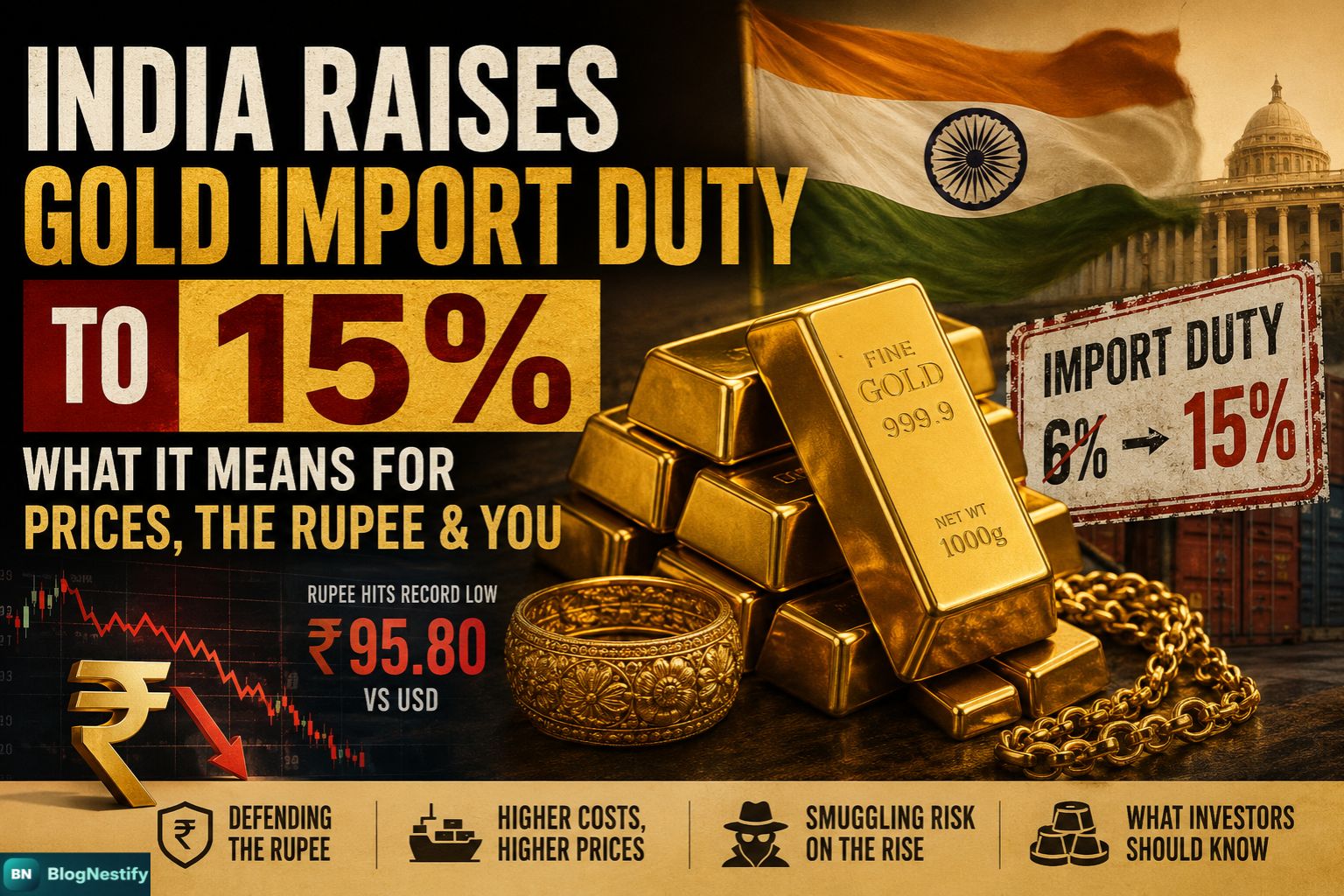
Two numbers in a government order: a 10% basic customs duty plus a 5% Agriculture Infrastructure and Development Cess (AIDC), together making the effective tariff on gold and silver imports 15%. That's where 6% became 15% — not a gradual increase, but a single-day reversal of a policy that had been in place since July 2024.
The context matters here. Eighteen months ago, the government cut import duties to 6% from 15% specifically to reduce gold smuggling, which had been surging when high duties made grey-market trade lucrative. That cut worked. Unofficial gold imports dropped from 156 tonnes in 2023 to just 20.4 tonnes in 2025. Now the government is taking duties right back to where they were — and traders are already warning the smuggling networks will wake back up.
The timing follows Prime Minister Narendra Modi's address to the nation, in which he publicly asked Indians to avoid buying gold for a full year as an act of economic solidarity. The tariff hike is the regulatory follow-through to that appeal. Whether citizens comply is another question entirely.
Why the Rupee Needed Help — and Why Gold Is the Target
The rupee hit a record low of 95.80 against the US dollar on May 13 — the same day the tariff order dropped. It has lost roughly 6% against the dollar so far in 2026, and a Mint poll of ten banks and economists found most expecting it to slide further toward 96–98 per dollar by year-end.
Gold is an obvious target for a government trying to slow currency depreciation. India is the world's second-largest consumer of the metal and meets nearly all of its domestic demand through imports. Gold and silver together account for close to 11% of total Indian imports. In FY2026 alone, gold imports hit an all-time high of $71.98 billion — up 24% from the previous year — driven by strong investment demand and record global prices.
Every dollar spent importing gold is a dollar that puts downward pressure on the rupee. The mechanism is direct: Indian buyers convert rupees to dollars to pay for gold, which increases demand for dollars and weakens the local currency. Making gold imports more expensive reduces that dollar outflow.
"Lower gold imports can indeed help lower current account outflows for India, as gold import outlays are substantial. But energy costs are still front and center, and while these are elevated, we expect pressure on the rupee will persist." — Vishrut Rana, Asia-Pacific Economist, S&P Global Ratings
| Metric | Before (6%) | After (15%) | Direction |
|---|---|---|---|
| Gold import duty | 6% | 15% | ▲ +9pp |
| Silver import duty | 6% | 15% | ▲ +9pp |
| Platinum import duty | 6.4% | 15.4% | ▲ +9pp |
| Grey-market smuggling margin/kg | ~₹1.4M | ~₹3M (record) | ▲ 2x+ |
| Gold ETF demand | Moderate | Increasing | ▲ |
| Jeweller share prices | Stable | Fell (May 13) | ▼ |
| Unofficial gold imports (2025) | 20.4 tonnes | Expected to rise | ▲ Risk |
The Smuggling Paradox: Higher Duties, Higher Grey-Market Risk
Here's the uncomfortable truth the government is navigating: when you make legal gold imports more expensive, you don't necessarily reduce gold consumption — you redirect it through informal channels. This is exactly what happened between 2012 and 2024, and the numbers tell the story plainly.
The smuggling margin per kilogram of gold has hit a record 3 million rupees. At current global gold prices — hovering around $4,700 per ounce — the difference between what legal importers pay and what a smuggler pockets is enormous. Grey-market operators who had largely gone quiet since the 2024 duty cut now have every financial incentive to rebuild their networks.
Unofficial gold imports had fallen from 156 tonnes in 2023 to just 20.4 tonnes in 2025 — a dramatic improvement achieved precisely by lowering duties. That progress is now at risk. Customs officials and the Directorate of Revenue Intelligence have already reported upticks in smuggling activity, and industry dealers in Mumbai and Chennai say grey-market networks can reactivate quickly — converting smuggled gold in hours rather than days thanks to strong festival demand.
India's Gold Policy Has Always Been This Cyclical
This is worth saying plainly because it gets lost in the urgency of each announcement: India has been through this exact cycle before. The government raises duties when the current account deficit balloons, smuggling rises, official data deteriorates, then duties come back down. Rinse and repeat.
India raised gold import tariffs from 2% to 10% to address a widening current account deficit. Demand remained resilient; smuggling increased.
Government hiked gold import duty to 15% from 10.75% amid concerns about CAD widening after the Russia–Ukraine war shock and surging commodity prices.
Duties were cut back to 6% to curb rampant smuggling, support the gems and jewellery industry, and reduce domestic gold prices. Unofficial imports fell sharply — from 156 tonnes to 69 tonnes in a single year.
Duties hiked back to 15% following rupee at record low of 95.80 per dollar, gold imports hitting $71.98 billion annually, and geopolitical cost pressures. The cycle restarts.
Hareesh V, Head of Commodity Research at Geojit Investments, put it concisely: the duty hike will immediately push up local gold prices and could temporarily dampen demand, but India's strong cultural and economic connection to gold means long-term demand is unlikely to decline in any meaningful way. People buy gold at weddings, during festivals, as emergency savings in rural households, and as loan collateral. A tariff doesn't change those fundamentals.
What This Means If You're Investing in Gold Right Now
The tariff hike changes the cost structure of physical gold in India without touching the underlying global price. Globally, gold was trading around $4,724 per ounce in early May 2026 — up roughly $1,364 from a year earlier. J.P. Morgan has forecast a Q4 2026 average of $5,055, and some analysts at JP Morgan put a $6,300 year-end target on the table in February. None of that changes with India's domestic policy.
What does change for Indian investors is this: physical gold (bars, coins, jewellery) will cost more in rupees because the landed cost of imported bullion has risen. That increase gets passed through the supply chain to the retail buyer. If you were planning to buy physical gold, prices will be higher.
Gold ETFs and Sovereign Gold Bonds, on the other hand, track international prices and do not bear the same import cost burden — which explains why gold ETF stocks rallied on the day jeweller shares fell. If you want gold exposure without paying the import-duty premium, paper gold products are the practical workaround most Indian investors are now eyeing.
For jewellery buyers, experts expect demand to soften at the high end and shift toward lower-carat pieces in the short term. Wedding demand, which has historically powered much of India's gold consumption, tends to be more price-inelastic — buyers will pay more if they have to — but significant price spikes do shift budget allocation.
Where Gold Prices Are in the Global Picture
None of this happens in isolation. Gold crossed $4,700 per ounce in early May 2026 — a year-on-year gain of about $1,364. Silver hit near-record highs earlier in the year, briefly approaching $120 per ounce before a correction. Both metals have been driven by the same forces: geopolitical uncertainty (particularly the ongoing Middle East conflict), continued central bank gold buying, dollar weakness, and investor anxiety about equity markets.
India's tariff decision, while significant for domestic demand, carries weight for global bullion markets too. India's role as the world's second-largest gold consumer means any sustained reduction in its official import demand would put downward pressure on physical premiums in Asian markets. That said, if grey-market trade picks up as many dealers expect, official import statistics will become an unreliable measure of actual Indian consumption — which will complicate the demand picture for global traders.
Will the Policy Actually Work?
That's the honest question, and the honest answer is: partially, probably, for a while. The current account deficit argument is real — gold and silver are 11% of Indian imports, so making them more expensive does reduce the dollar outflow if demand drops. The rupee gets some breathing room.
But history says demand won't fall by much. Indians kept buying gold when duty hit 10% between 2012 and 2013. They kept buying when it was at 15% from 2022 through 2024. The cultural and financial reasons to own gold in India — hedging inflation, rural emergency savings, wedding tradition, gold-backed loans — don't disappear because a tariff went up.
The bigger policy risk is a familiar one: high duties push trade underground, official data becomes unreliable, the grey market grows, and eventually the government cuts duties again to restore transparency. That's the cycle Business Standard called "India's gold policy trap." It has happened before. The question is whether 2026 ends any differently than 2024 did.
Frequently Asked Questions
Disclaimer: This article is for informational purposes only and does not constitute investment advice. Gold and precious metal markets are volatile. Consult a SEBI-registered financial advisor before making investment decisions. Price data and policy details are sourced from publicly available reports as of May 14, 2026.
0 Comments
Leave a Comment