Petrol Up Rs 2.61, Diesel Rs 2.71: India's Fourth Fuel Hike in Less Than Two Weeks
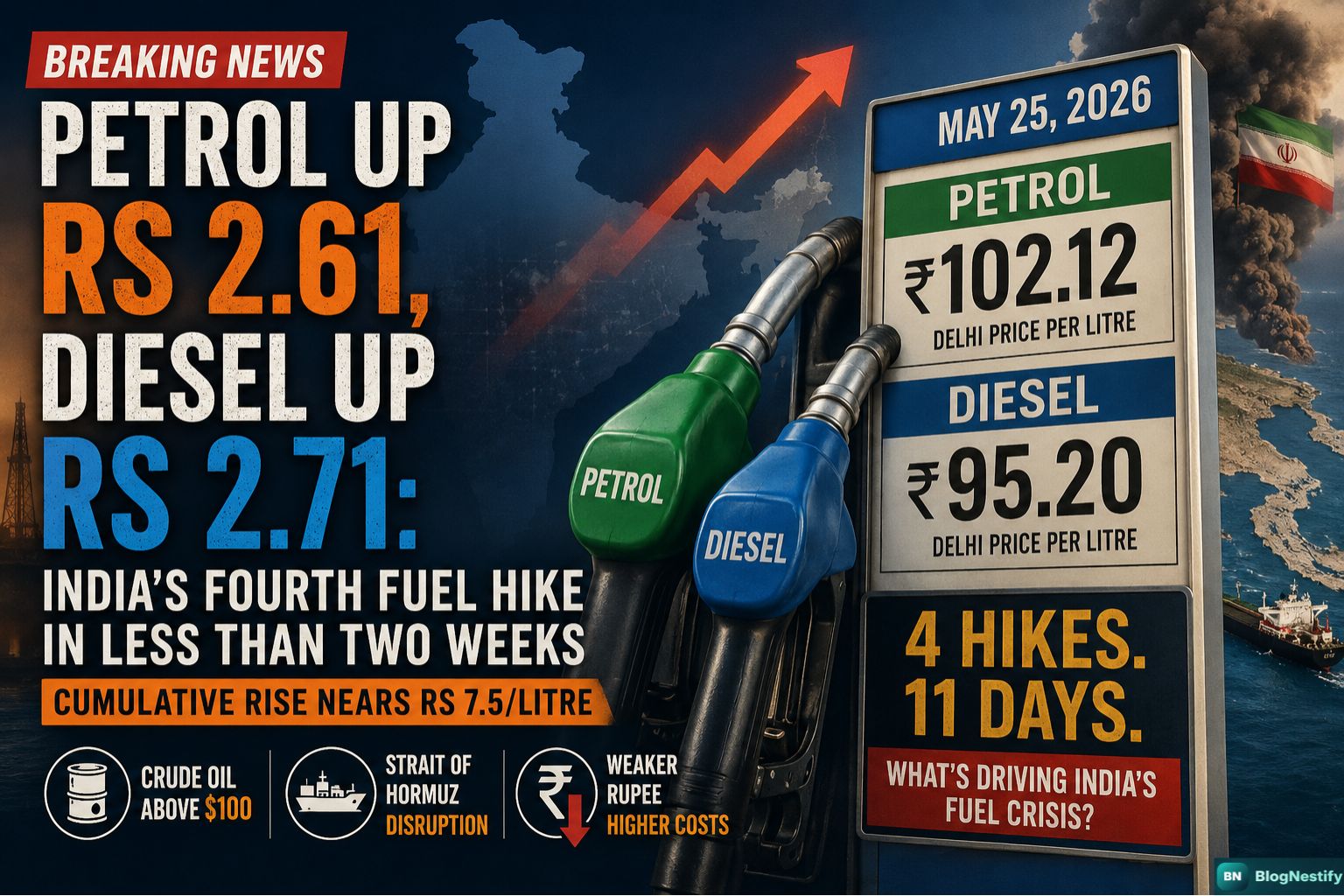
Cumulative increase nears Rs 7.5/litre since May 15. Delhi petrol crosses Rs 100 mark. Here's what changed, why it's happening, and what comes next.
India woke up on Monday, May 25, to another round of fuel price hikes — the fourth in less than two weeks. State-owned oil marketing companies raised petrol by Rs 2.61 per litre and diesel by Rs 2.71, pushing prices in New Delhi past the Rs 100 mark for petrol for the first time since the current revision cycle began. The back-to-back increases are the fastest and steepest India has seen since the fuel price freeze was lifted on May 15, 2026, and they're hitting household budgets, truckers, and the broader economy all at once.
How We Got Here: A Timeline of Four Hikes
Until mid-May, India's fuel prices had been frozen for months. Oil marketing companies (OMCs) — Indian Oil Corporation (IOC), Bharat Petroleum (BPCL), and Hindustan Petroleum (HPCL) — were quietly absorbing losses as global crude prices climbed. Then the dam broke.
That's four price revisions in eleven days, with cumulative increases touching nearly Rs 7.5 per litre on both fuels. For the average Delhi resident filling a 40-litre tank, that's roughly Rs 300 more per fill than two weeks ago.
Current Petrol and Diesel Prices Across Major Cities
Fuel prices vary city to city due to differences in state VAT and local levies. Here's where things stand after today's revision:
Kolkata now has the most expensive petrol among major metros at Rs 113.51/litre. Mumbai and Chennai are not far behind. These are prices that most two-wheeler and small-car users haven't seen since the 2021–22 peak.
Why Are Fuel Prices Rising So Steeply?
Three forces are colliding at once — and they're all pulling in the same direction.
1. Crude Oil Above $100 Per Barrel
Global crude prices have crossed the $100 per barrel mark, a threshold that triggers automatic pain for oil-importing countries like India. India imports roughly 85% of its crude requirement, so when international prices spike, domestic costs rise quickly. The question is always whether OMCs absorb those costs or pass them on — and right now, they're clearly passing them on.
2. The US-Iran Conflict and Strait of Hormuz
The primary driver behind the current crude price surge is the ongoing US-Iran conflict and the closure of the Strait of Hormuz — the narrow waterway through which nearly 20% of the world's oil supply flows. When that corridor is disrupted or threatened, energy markets react immediately. ONGC Director (Exploration) Sushma Rawat put it plainly: whenever a peace accord is announced, crude prices start falling. Until that happens, prices will stay volatile.
3. A Weaker Rupee Makes Imports More Expensive
India buys crude in US dollars. When the rupee weakens against the dollar — as it has been — the same barrel of oil costs more in rupee terms. This compounds the impact of rising global prices and squeezes refining margins further.
What This Means for You and the Wider Economy
Fuel prices don't exist in isolation. When diesel gets more expensive, it affects almost everything that moves — freight trucks, agricultural equipment, delivery vans, public buses. Inflation tends to follow fuel hikes with a short lag, showing up first in food and logistics, then spreading through the supply chain.
For households running petrol-driven two-wheelers or cars, the pinch is immediate and direct. A monthly commuter who fills up four times a month is spending about Rs 1,200 more per month than they were on May 14. That's not catastrophic, but it's not nothing either — especially at a time when other household costs haven't been standing still.
For businesses that depend on road freight — and most supply chains in India do — the cost pressure is already showing up in rate negotiations. Truckers' associations have started flagging the impact, and freight rates typically adjust within two to three weeks of a significant fuel move.
Will Prices Keep Rising?
That depends almost entirely on what happens to global crude prices. If the geopolitical situation in West Asia stabilises and the Strait of Hormuz reopens to normal traffic, crude prices could fall sharply — and Indian OMCs would likely slow or pause revisions. But as long as the conflict continues and supply remains constrained, the pressure to keep hiking is real.
There's also the question of domestic politics. Major state elections are not immediately on the horizon, which gives the government some room to allow market-driven pricing to continue. In the past, price freezes have often coincided with election cycles. For now, that particular brake seems to be off the table.
The honest answer is: nobody knows when this stops. Markets are watching West Asia closely. Every escalation risks another jump in crude. Every ceasefire rumour brings a brief pullback. The volatility is the story right now.
📌 Key Takeaways
- Petrol up Rs 2.61/litre and diesel up Rs 2.71/litre on May 25, 2026 — the fourth hike in under two weeks.
- Cumulative increase since May 15 is nearly Rs 7.5/litre on both fuels.
- Delhi petrol crossed Rs 100/litre; Mumbai petrol now at Rs 111.21/litre.
- Three core drivers: crude above $100/barrel, Strait of Hormuz disruption, weaker rupee.
- IOC, BPCL, and HPCL — which control 90% of the retail market — are recovering months of accumulated losses.
- Further hikes depend on geopolitical outcomes in West Asia; no clear ceiling yet.
0 Comments
Leave a Comment