Trump Says US-Iran Peace Deal to Be Signed Today — What's in the Islamabad MOU and What Happens Next
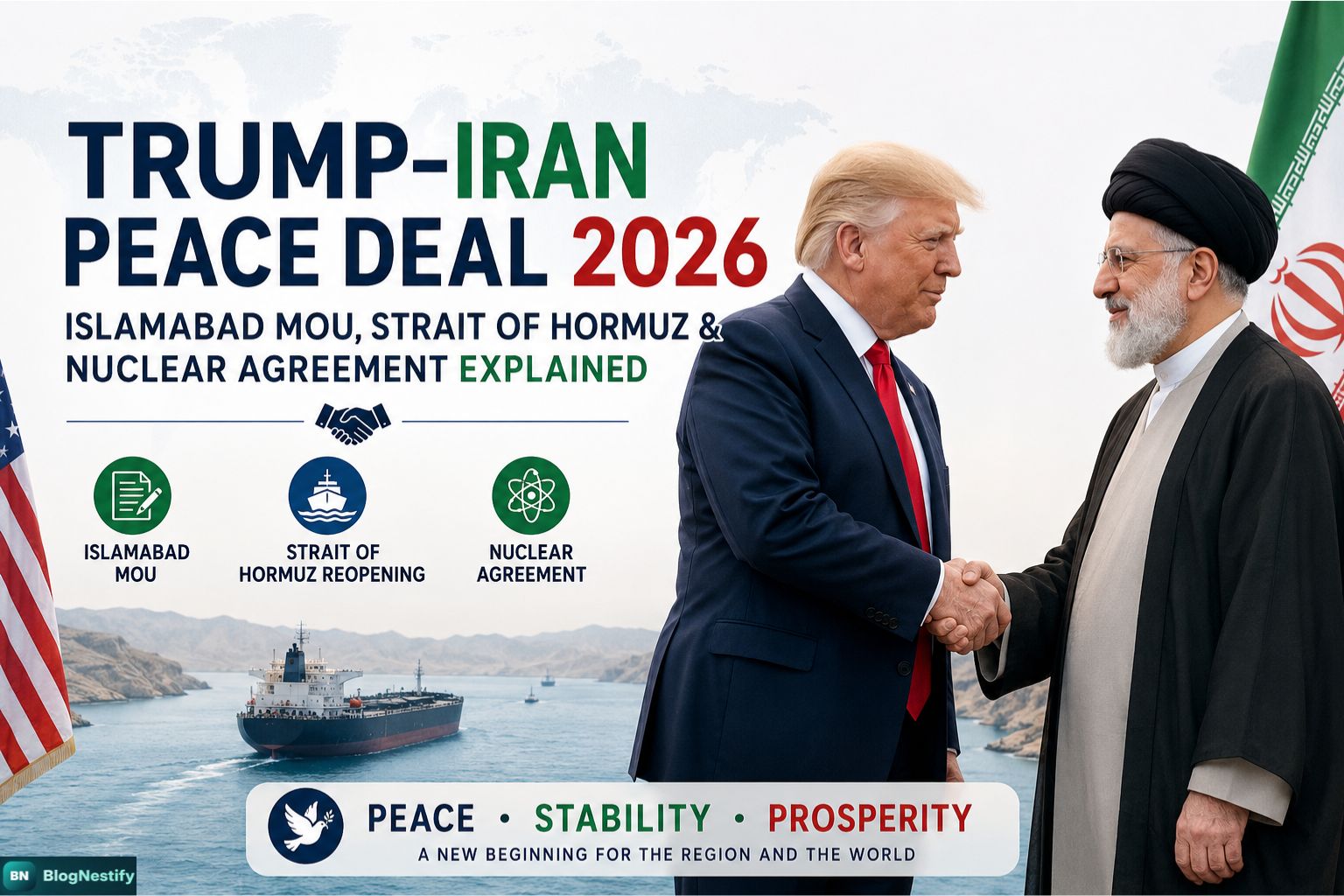
📋 Quick Summary
- President Trump announced on June 13 that a peace deal with Iran is "scheduled to be signed" on June 14, 2026.
- The deal is framed as the Islamabad Memorandum of Understanding (MOU), brokered by Pakistan.
- The MOU calls for an immediate reopening of the Strait of Hormuz, a 60-day ceasefire extension, and nuclear talks to follow.
- Iran's Foreign Ministry says signing is unlikely on June 14 but "could happen in the coming days."
- Pakistan's PM Shehbaz Sharif said the two countries are "closer to a deal than ever before."
Something that seemed nearly impossible just two months ago is now on the table. After a grinding military conflict that has choked global oil markets, pushed US inflation to multi-year highs, and rattled financial markets on three continents, the United States and Iran may be hours away from signing a formal peace agreement.
On the morning of June 13, President Trump posted on Truth Social that the deal was "scheduled to get signed tomorrow" — that is, today, June 14. He said the Strait of Hormuz, the narrow waterway through which a significant portion of the world's oil and gas flows, would open "immediately" after the signing.
Iran has a different timeline. The country's Foreign Ministry said it wouldn't happen today — but stopped short of walking away from the table. Pakistan, which has been the quiet engine behind these talks for weeks, is saying this thing is essentially done.
So where does the deal actually stand, what's in it, and what comes next? Here's a clear-eyed breakdown.
How We Got Here: The US-Iran War Timeline
The conflict between the United States and Iran escalated sharply in early 2026 after Tehran closed the Strait of Hormuz to international shipping. The blockade sent crude oil prices surging, triggered a wave of inflation across Western economies, and drew the US into a direct military confrontation with Iran. Trump authorized air strikes on Iranian targets while simultaneously pursuing a diplomatic exit.
Trump gave Iran 10 days to either "make a deal" or reopen the Strait of Hormuz, warning of severe consequences if Tehran refused.
After Pakistan's PM Sharif and Field Marshal Asim Munir intervened, Trump delayed planned strikes and agreed to a two-week ceasefire contingent on Iran partially reopening the Strait. Iran accepted.
Back-channel negotiations in Islamabad produced a draft MOU framework. Multiple rounds stalled over the Strait's control and Iran's nuclear program. Oil markets seesawed with each round of talks.
Trump announced he had called off planned Iranian strikes because talks reached "the highest level of Iranian leadership." Asked if a nuclear deal was part of it, he said: "Yes, conceptually."
Trump posted that the deal is "scheduled to get signed tomorrow." Iran's FM says not yet — Pakistan's PM says it's imminent. G7 sideline meetings scheduled for Monday.
What's Actually in the Islamabad MOU?
The Islamabad Memorandum of Understanding is a Phase 1 agreement — think of it as a ceasefire framework with a structured path toward a fuller deal, not the full deal itself. Based on reporting from mediating diplomats and US officials, here is what the MOU covers:
| MOU Component | Details | Timeline |
|---|---|---|
| Strait of Hormuz | Reopened immediately without tolls; shipping returns to pre-war volumes | Immediate / within 30 days |
| US Naval Blockade | Lifted simultaneously with Strait reopening | Upon signing |
| Ceasefire Extension | Existing ceasefire extended for 60 days, including in Lebanon | 60-day window |
| Nuclear Talks | Broader nuclear negotiations to be held during the 60-day window | 30–60 days post-signing |
| Enriched Uranium | Framework included; full removal terms to be agreed in Phase 2 | Second accord |
| Sanctions Relief for Iran | Based on compliance with MOU terms | Phased |
Important context: The MOU is a first phase, not a final settlement. Broader nuclear talks and a comprehensive peace treaty are expected to follow over the next 30 to 60 days. Iran's actual nuclear stockpile removal is tied to a second, more detailed accord.
Why Iran Is Pumping the Brakes
Trump's announcement on June 13 was confident and definitive. Iran's response was more cautious. Foreign Ministry spokesman Esmaeil Baqaei said on Iranian state media: "It will not be tomorrow." He acknowledged the deal could still happen "in the coming days" but blamed what he described as "the hesitancy of the other side" for the delay.
There are two real sticking points that haven't fully been resolved:
1. Who Controls the Strait of Hormuz?
This is the most sensitive issue. Iran's Fars news agency reported that under the latest draft text, the Strait remains under Iranian management — directly contradicting Trump's framing of the US "opening" it. Tehran has consistently argued that the US "has nothing to do" with the Strait, saying any arrangement must be agreed between Iran, Oman, and bordering nations. Trump, meanwhile, is selling this at home as the US forcing the Strait open.
2. Nuclear Program Terms
Iran has sought to push nuclear talks until after a formal cessation of hostilities. The US has wanted nuclear commitments baked into the initial MOU. Trump's June 11 claim that nuclear issues were agreed "conceptually" appears to be doing a lot of heavy lifting — Iran's Foreign Minister Araqchi has been notably careful not to confirm any specific nuclear commitments in the MOU itself.
"The Islamabad Memorandum of Understanding has never been closer. Pending its finalization, the media should refrain from entering speculation about its content."
— Iranian Foreign Minister Abbas Araqchi, June 12, 2026
Pakistan's Role: The Quiet Mediator That Made This Possible
It's worth pausing on just how central Pakistan has been to this entire process. This isn't a US-Iran bilateral negotiation in the traditional sense — Pakistan has been the back-channel intermediary, the venue provider, and in many ways the guarantor of both sides' commitments.
PM Shehbaz Sharif personally called Trump in early April to delay a massive military strike that was hours away. His government hosted the negotiations that produced the MOU framework. On June 13, Sharif said the two countries were "closer to a peace deal than ever before" and that Pakistan was preparing for an electronic signing ceremony. Pakistan's Deputy PM also confirmed he briefed Saudi Arabia's foreign minister on the deal's progress.
This positions Pakistan — often a sidelined player in Middle East diplomacy — as one of the more consequential peacemakers of 2026.
What could derail the deal: Israeli airstrikes on Hezbollah targets in southern Lebanon continue as of June 13, complicating the ceasefire provisions that extend to Lebanon. The G7 summit starting Monday is also a major variable — Britain and France have expressed interest in the deal's demining components, but the summit could shift Trump's attention or create new diplomatic pressures.
What This Means for Global Oil Markets and Inflation
The Strait of Hormuz closure has been one of the most economically disruptive events of 2026. A significant share of the world's seaborne oil and liquefied natural gas passes through this narrow waterway. When Iran shut it down, crude prices spiked, energy costs across Europe and the US jumped sharply, and US inflation hit its highest level in years.
Financial markets have already started pricing in a deal. Wall Street futures jumped on the morning of June 13 after reports of a breakthrough — S&P 500 futures were up 0.6%, the Dow added 0.7%, and oil prices dropped more than 3% in a single session.
A confirmed signing and Strait reopening would likely push oil prices lower quickly. The knock-on effect for global inflation — particularly in countries heavily dependent on Middle Eastern energy supplies — could be significant within weeks.
Key Takeaways
Peace Framework
The Islamabad MOU is a Phase 1 ceasefire and Strait-reopening agreement, with nuclear talks to follow over 60 days.
Oil Markets
Crude prices fell 3%+ on deal optimism. A confirmed signing could push energy prices lower significantly and ease global inflation.
Pakistan's Role
Pakistan's PM Sharif and Field Marshal Munir are the architects of this deal — a rare diplomatic triumph for Islamabad.
Timing Uncertain
Iran says not June 14. Pakistan says imminent. Trump says today. The signing window is still open — watch this space.
Frequently Asked Questions
The Bottom Line
The US-Iran peace deal is not signed yet. It may not be signed today. But by almost every measure — the language coming out of Islamabad, the movement in financial markets, the G7 meeting on Monday, Trump's willingness to cancel strikes — we are in the final stages of a process that looked impossible just eight weeks ago.
The specific date has always been less important than the direction. Both sides appear to want out of this conflict. The Strait question and the nuclear framing are real sticking points, but they are negotiating sticking points — not dealbreakers. Pakistan has too much invested in this to let it fall apart over a press release.
Watch for updates out of the G7 summit beginning Monday, where Trump is expected to meet with the leaders of Egypt, Qatar, and UAE on the sidelines specifically to discuss ending this war. That's where the next signal will likely come from.
0 Comments
Leave a Comment